
The training dummy in World of Warcraft is the most underutilized tactical tool in the game, often treated as a place for simple “Ego-Parsing” rather than a precision laboratory. For players aiming to bridge the gap between “good” and “elite,” developing a structured Training Dummy Plan forms a reliable framework for mastery. It is about understanding that the dummy provides the only deterministic environment where you can measure the impact of micro-adjustments without the variance of dungeon mechanics.

This guide examines how to approach dummy practice efficiently, focusing on the logic of “Standardized Testing,” the mechanics of “Burst-Window Calibration,” and the strategic importance of the “Uptime Stress Test” to ensure your progress is measurable and real.
The Logic of the Standardized Test
To improve, you must have a baseline. A successful dummy plan uses a deterministic “Five-Minute Test.” You choose a specific talent loadout and execute your full rotation for exactly 300 seconds. By recording the results (using Details! or a combat log), you create a data point. When you change a piece of gear or a talent, you run the test again. This scientific approach removes the “guesswork” from your character’s power. You stop wondering if a change was better and start knowing exactly how much damage-per-second it is worth.
Core Tactics: Burst Windows and Resource Pooling
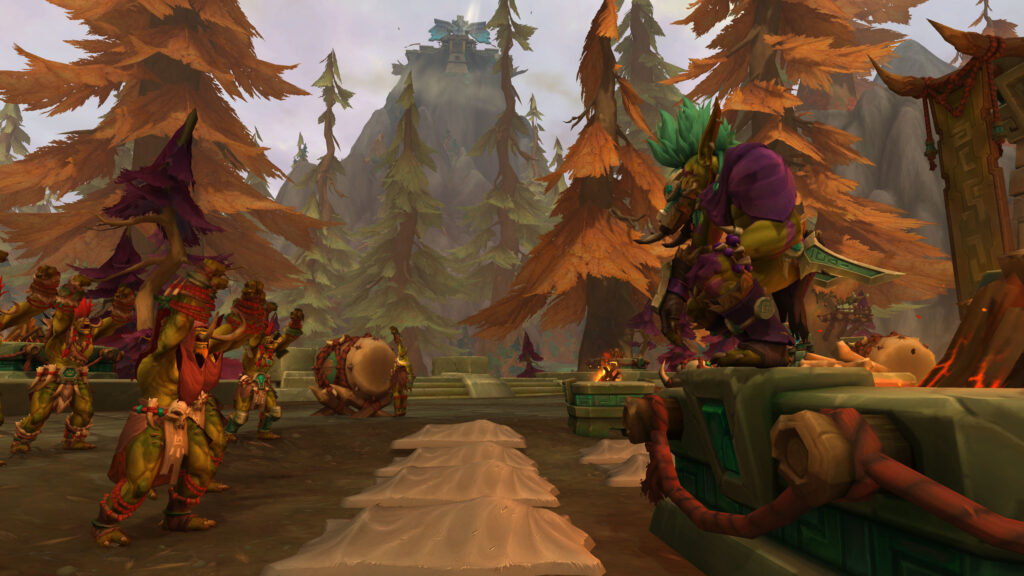
To turn dummy practice into combat readiness, you must utilize these specific calibration habits:
- Opening Burst Replication: Practice your first 20 seconds of combat fifty times in a row. The “Opener” is the most complex part of any spec; it must be executed with zero thought. If you stumble on the tenth repetition, you are not ready for a Mythic boss.
- Pooling and Dumping Rhythm: Use the dummy to find the “Natural Rhythm” of your spec’s resource generation. Learn exactly how long it takes to go from zero to full resources. This timing is the “Internal Clock” that allows you to predict when your next big hit is ready without looking at your UI.
- Active Movement Simulation: Never hit a dummy while standing still for more than thirty seconds. Every minute, force yourself to “blink-and-reposition” or “strafe-and-cast.” If your DPS drops by more than 10% during these movement segments, your rotational priority is too fragile for real content.
Managing “Maintenance Fatigue” in Long Sessions
The biggest challenge of dummy practice is “Mental Drift”—losing focus after two minutes and letting your maintenance buffs drop. This is actually the most valuable part of the training. By forcing yourself to stay focused for a full ten-minute “Marathon Pull” on the dummy, you are building the “Concentration Endurance” needed for long progression bosses. A veteran player uses the dummy to “Hard-Code” their concentration. If you can play perfectly for ten minutes in a silent city, you can play perfectly for six minutes in a chaotic raid. Mastery of your own attention span is the ultimate hidden buff.
Establishing the “Kill-Zone” Execute Routine
The final phase of dummy mastery is practicing the “Execute Phase” (the final 20-30% of a boss’s life). Use the “Raider’s Training Dummy” (which can be set to low health percentages) to practice your spec’s high-pressure finishing moves. This phase usually involves faster resource spending and different ability priorities. Integrating these “Execute Loops” into your routine ensures that when the boss is at 5% and the group is panicking, you are executing your most lethal rotation with robotic precision. Master the dummy, and you master the kill.
Conclusion: Data-Driven Performance

Training dummy plans reward the analytical and the persistent. By treating the dummy as a precision testing ground and simulating combat pressure, you nullify the randomness of performance. Integrating these laboratory habits into your routine ensures that your skill is a measurable upward curve, providing a stable path to dominance through superior mechanical calibration.